Saturday, March 29, 2014

Challenge Problem II - Emergency Phone Booths

DUE: Friday 4th April @ 8:30 am

Emergency Phone Booths
The telephone company wants to set up emergency phone booths so that everyone living with in 12 blocks of the center of town is within four blocks of a payphone booth. Money is tight, the telephone company wants to put in the least amount of booths possible such that this is true. Indicate the locations of the phone booths and the minimum number of booths the telephone company will need to install.


Spherical and Hyperbolic Geometry - Group 5 (John, Kendra, Keven, La'Neasia)

For this discussion your group must answer the following essential questions:

·    What is Spherical Geometry?

·    How is Spherical Geometry used in the real world?

·   What is Hyperbolic Geometry?

·    How is Hyperbolic Geometry used in the real world?

Your responses must be clear, concise, and must contain explanations that appeal to all learning styles in our classroom. You can create explanations with notes, pictures and links to videos that may enhance the class' understanding of the topic.

Non-Euclidean Geometry - Group 4 (Destiny J, Elexis, Elijah, Jamel)

For this discussion your group must answer the following essential questions:

·    What is Euclidean Geometry?

·    How is Euclidean Geometry used in the real world?

·   What is Non - Euclidean Geometry?

·    How is Non - Euclidean Geometry used in the real world?

Your responses must be clear, concise, and must contain explanations that appeal to all learning styles in our classroom. You can create explanations with notes, pictures and links to videos that may enhance the class' understanding of the topic.

Challenge Problem I - How Can I Get There?

DUE: Friday 4th April @8:30 am.

How Can I Get There?
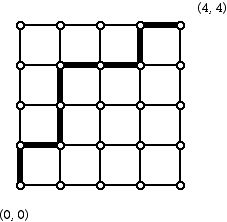
How many different paths that move along integer valued horizontal or vertical lines are there that move east or north that join (0, 0) to (4, 4)? Show all paths and calculate the taxi cab distance of each path.Determine which path is most efficient? Justify your response.


(A typical example of such a path is shown with thick segments above.)

Sunday, March 9, 2014

Area and Perimeter - Group 3

For this discussion your group must answer the following essential questions:

·    How do you find the area and perimeter of two dimensional figures, namely, a square, rectangle, parallelogram, trapezoid, triangle, and circle?
·    How do you find the surface area of three dimensional solids, namely, a  cube, rectangular solid, sphere, cone, cylinder, and triangular solid?
·   How do you find the volume of geometric solids, namely, rectangular solid, triangular solid, trapezoidal solid, and pentagonal solid?

Your responses must be clear, concise, and must contain explanations that appeal to all learning styles in our classroom. You can create explanations with notes, pictures and links to videos that may enhance the class' understanding of the topic.

Area and Perimeter - Vocabulary

As you complete unit 8, you should be looking for the following vocabulary words and
their definitions:
• polygon
• perimeter
• area
• trapezoid
• parallelogram
• triangle
• rectangle
• circle
• circumference
• radius
• diameter
• legs (of a right triangle)
• hypotenuse

Formulas:
You should be looking for the following formulas as you read:
• area of a rectangle
• area of a parallelogram
• area of a trapezoid
• area of a triangle
• Heron’s Formula (for area of a triangle)
• circumference of a circle
• area of a circle
• Pythagorean Theorem

Challenge Porblem: Platonic Solids

You may have never heard of platonic solids, but don't let that stop you from trying this project!

Objective

Investigate the five platonic solids to understand why they are unique and why there are only five.

Concept

Take a look at the five solids pictured below.
These solids share some characteristics that make them unique.

Before we go any further, let's think about some geometry.
A polyhedron is a three dimensional solid with faces that are all polygons. Polygons are closed shapes with straight sides. Look a little closer at the five platonic solids. What observation can you make about the faces of each individual solid?
Each face is made of sides that are of equal length. It follows then that all the interior angles are equal. When polygons have this property they are called regular polygons. When a polyhedron is constructed of identical regular polygons, it is called a regular polyhedron.
The points on each solid where the faces meet are called the vertices. A vertex must meet certain requirements. At least three faces must meet at each vertex and the sum of the interior angles of the regular polygons meeting at each vertex cannot meet or exceed 360°.
Let's recap. Platonic solids are regular polyhedrons. This means that they are solids formed from at least three regular polygons meeting at a vertex. Every face is the same and every side of each face is also the same. Because the faces all have equal sides, they also have equal interior angles.

Hypothesis (at least 1/2 page)

Now that you know a little more about platonic solids, why do you think that there are only five? Perhaps you think there are more than five?

Materials

  • Access to a printer
  • Paper
  • Scissors
  • Glue or tape
  • Coloring utensils, if desired

Procedure

Before going any further, it would probably be a good idea to construct your own models of the five platonic solids. Provided below are the patterns for the Tetrahedron and Icosahedron, create your own patterns for the other shapes. If you would like, first color the patterns. Then, cut along the solid outer lines and fold the inner solid lines. Use the tabs to glue or tape the solid together.
Next, use your models to make observations and fill out this chart. NOTE: To find the measure of the interior angle of each polygon face:
  1. Let n be the number of sides of the polygon.
  2. Use 180°(n-2) to give the sum of the interior angles.
  3. Divide by n to give the measure of each individual angle.
TetrahedronHexahedronOctahedronDodecahedronIcosahedron
Shape of polygon faceEquilateral Triangle
Number of interior angles on each polygon face3
Interior angle of polygon face60°
Number of faces (entire solid)4
Number of edges (entire solid)6
Number of vertices (entire solid)4
Faces meeting at vertex3
Now that you have examined the properties of the five platonic solids, let's try to find out why there are only five.
  1. Start by choosing a regular polygon. For example, let's take a look at the equilateral triangle.
  2. If we know that at least three faces are needed to make a vertex, what would happen if three equilateral triangles met at a vertex? Would it be allowed? Remember that the interior angles of the faces meeting at each vertex cannot be greater than or equal to 360°.
  3. To check, try this...(use your chart as a reference) 60°(degrees of interior angle) x 3(faces meeting at vertex) = 180° 180° < 360°, therefore this is a possibility.
  4. Which platonic solid is this?
  5. Now, think about what would happen if 4 equilateral triangles met at each vertex. Would this be allowed? If it is, which platonic solid would it be?
  6. How about 5 equilateral triangles, 6 equilateral triangles? What happens?
  7. Next, try the same thing with other regular polygons. (i.e. squares, pentagons, hexagons..)

Analysis (at least 1/2 page)

Were you able to produce all five of the platonic solids? Why or why not.

Conclusion (at least 1 page)

This is your chance to show how much you've learned. Be sure to give an answer as to why there are only five platonic solids.

Extension

Perhaps this project is not quite challenging enough for you or you would like to investigate further into three dimensional solids. Some suggestions would be to consider solids where every face is not the same. What about polyhedron made up of two different types of faces? Are these solids limited in the same way the platonic solids are? Do you think it would be possible to create a solid of all non regular faces? Research polyhedron and let your own curiosity lead you to developing a unique science fair project.

Challenge Problem: Tessellation Project

Tessellations Research Project - Due 3/17/14
For this project, we will conclude with a project on Tessellation.  You will have an option of the type of project that you would like to work on.  Below is a list of project options:

Option 1 – Creating Tessellations Using Animate Figures
•    You should know how to create tessellations using regular and irregular shapes, but for this project you will create a tessellation using animate figures (using people and animals).
•    The appearance of your tessellation should be neat!  Your tessellation (pattern) should cover the ENTIRE page (no gaps or unintentional white spaces). 
•    You are to turn in the template figure you used to create your tessellation.  Coloring should be in between the lines, and No wrinkled or torn projects!
•    Your project will also be based on Creativity and Difficulty. The more difficult and complex the tessellation is, then the higher the grade.
•    You are to turn in the following items for this project option:

o    Cover page:
-    Name, Date
-    Learning Standards (provided)
-    Introduction with definition of tessellation.
o    Tessellation artwork
o    Tessellation template figure
•    See instructions below for creating tessellations using animate figures:

Creating Animate Figures with Tessellations
There are two approaches to altering tessellating polygons into animate figures
1.    Have a specific object in mind and to alter the original polygons (rectangle, square, or parallelogram) sides to make the shape look like the object (nibbling techniques).  This approach may require a bit of trial and error.
2.    Create a new shape using the nibbling techniques and then use your imagination to see that you think it “look like”.  Below are two examples
Does the new shape look like anything special to you?  Does it remind you of anything?  There are many things it could be.  It could be the head of a person wearing a feather in his cap
Here is a different altered square.  What does it look like to you?  Maybe a flying owl?

Option 2 – Tessellation Research Paper
•    You will create a research paper on tessellation and answer the main question: “How is tessellation related to mathematics?”
•    Your research paper is made up of two parts:

o    Part 1 – What is Tessellation?
-    Define a tessellation
-    Identify the properties of tessellations
-    Brief history of tessellations
-    Find specific examples of tessellations in nature as well as man-made tessellations (one each).
-    This part should be 2 pages long.
o    Part 2 – M.C. Escher Essay
-    You are to write a 1-2 page essay on the Mathematical art of M.C Escher.
-    Your essay should include:
•    His background.  Who is M.C. Escher? Where he was born?  What was his education? Etc.
•    Escher’s contributions to art and mathematics.  How does he integrate Mathematics with art?  Also give specific examples of his work.
•    What was his nickname and any additional interesting facts about him?
•    The paper should be typed, 12 point font, Times New Roman, double spaced, and 1 inch margins.
•    In addition to the 1-2 pages you are to have a reference page of the websites you used to write your essay.

Option 3 – Creating Online Video Using SmartBoard Tools on Tessellation
•    You will create a brief video using SmartBoard Tools which will serve as a tutorial for others on how to create a Tessellation using a basic geometric shape.
•    A rubric will be provided to guide you through your project; it will include the categories of accuracy in construction of the tessellation, clarity in explanation and instruction, and presentation.

Option 4 – Your Own Project Idea on Tessellation
•    You will develop your own project idea on tessellation; it might be a combination of any of the three option ideas presented above, or it might be your own research on the history of tessellations in art and math, or a research and artistic analysis of a piece of work and how tessellation is used and the mathematics that is related to it.
•    The research project must be at least three typed pages and it must follow similar standards as those for project option 2 (see above).
•    A rubric will be provided to guide you through your project.

Summary
1.    Which project idea will you work on? What help will you need for your project?
2.    Use the space below to plan for your project: